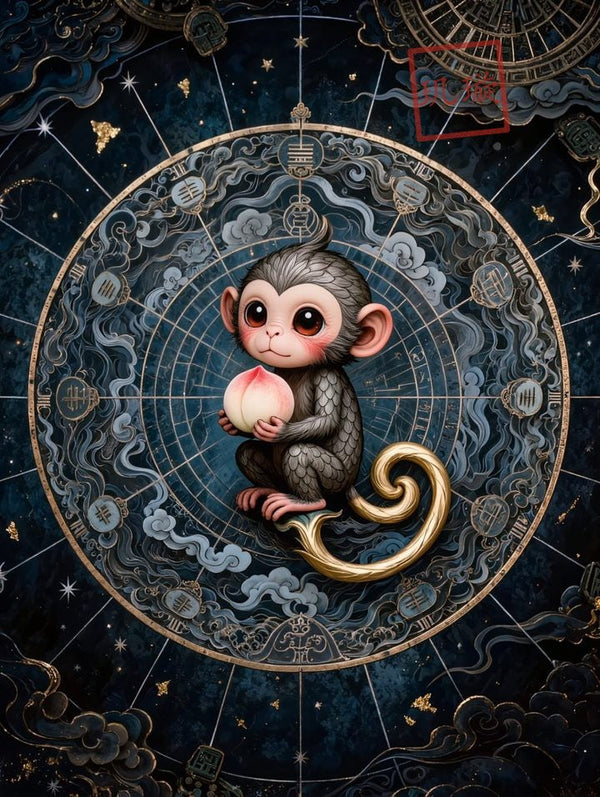
Western astrology's compatibility charts work sign-by-sign: twelve signs, seventy-eight possible pairs. The Chinese system is tidier. The twelve branches group into four triangles of three, and signs inside a triangle are traditionally held to work well together.
The four groups
- Rat, Dragon, Monkey — the water trine. Strategists. Quick to spot an opening, comfortable with complexity.
- Ox, Snake, Rooster — the metal trine. Builders. Patience plus precision; they finish what the first group starts.
- Tiger, Horse, Dog — the fire trine. Movers. Direct, loyal, impatient with process.
- Rabbit, Goat, Pig — the wood trine. Accommodators. Sensitive to atmosphere, good at holding a group together.
Notice that these are the same groupings you meet in the five-element analysis: each triangle shares a phase. Compatibility here is not chemistry, it is a shared operating rhythm.
The opposing pairs
Each sign also has an opposite branch, six apart on the wheel: Rat and Horse, Ox and Goat, Tiger and Monkey, Rabbit and Rooster, Dragon and Dog, Snake and Pig. In the traditional reading these pairs generate friction rather than ease — which is not the same as "bad". Friction produces motion, and plenty of durable partnerships are built on it.
What compatibility is actually used for
In practice the traditional use is not dating. It is choosing a partner for a long project — a business, a household, a marriage understood as a working arrangement. The question asked was never "will we feel sparks" but "will we still be able to work together in year ten".
That is a more sober question, and the answers are correspondingly more sober.
The paired set
We make a two-sign set for exactly this reason: two numbered cards, one for each sign, with a joint reading of how the pair's elements sit against each other. It is a gift more often than a purchase for oneself — which tells you something about what the object is for.